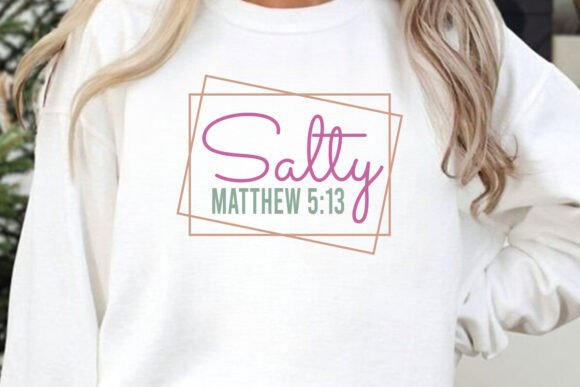
Salty Matthew 5:13 SVG – Jesus SVG
A Designer’s First Look: Clean, Reverent, and Ready for Stitching
When I opened Salty Matthew 5:13 SVG – Jesus SVG, my first thought wasn’t about theology—it was about stitch count, negative space, and how well those delicate curves would translate to thread on a sweatshirt. This isn’t a flashy graphic; it’s a quiet, centered composition with soft lettering, subtle flourishes, and a gentle vertical rhythm. The “Salty” motif nods to Matthew 5:13 (“You are the salt of the earth”) without literal imagery—no anchors, no ocean waves—just clean typography and intentional spacing. That restraint is its strength. As a designer who’s stitched hundreds of faith-based pieces for boutique clients and Etsy shops, I immediately saw this working on a linen tea towel, a baby onesie, or a minimalist apron—not as a bold statement, but as a thoughtful detail.
Where It Shines: Real Projects, Real Fabric
I tested Salty Matthew 5:13 SVG – Jesus SVG across three real-world items: a medium-weight cotton tote bag, a fleece-lined unisex sweatshirt, and a 100% cotton kitchen towel. On the tote, it stitched cleanly at 3.75" wide—no thread breaks, no puckering. The letterforms held crisp edges thanks to balanced stitch density and generous kerning. On the sweatshirt, I used a light tear-away + cut-away hybrid stabilizer, and the design retained its legibility even over the fabric’s slight texture. Most impressively, on the tea towel—where dense fill stitches often bleed—I got sharp contrast using navy thread on natural cotton. This is a machine embroidery design that respects fabric behavior, not one that fights it.
It fits naturally into several high-demand niches: personalized gifts (think baptism or confirmation towels), small shop product lines (nursery decor, pastor appreciation bundles), and commercial embroidery for church staff apparel. Because it avoids heavy outlines or tight serifs, it scales down reliably—even at 2.5" for a baby bib or cap front—without losing readability. That makes it unusually versatile for an embroidery file rooted in scripture.
Where to Proceed Thoughtfully
This isn’t a “set-and-forget” design for every surface. On highly textured fabrics like terry cloth or bouclé knit, I recommend testing stitch density first—some fill areas may need slight reduction to avoid stiffness. On thin or stretchy fabrics (like jersey tees), use a firm cut-away stabilizer and consider simplifying small interior details if your machine struggles with fine transitions. And while the layout works beautifully on flat panels, avoid placing it directly over seams or curved zones like cap crowns unless you’ve confirmed hoop clearance and digitizing flow.
The lettering is elegant but not ultra-bold—so on dark fabric, skip light pastel threads. Navy, charcoal, deep forest green, or burgundy deliver clarity and warmth. Also, if you’re planning layered garments (e.g., embroidered patches sewn onto jackets), check whether the original digital embroidery file includes separate layer files for appliqué or satin-stitch borders. Since only SVG format is listed, confirm with the seller whether additional embroidery-specific formats (PES, DST, JEF) are available—or whether you’ll need to digitize further for multi-step builds.
Design Assets That Build Trust—Not Just Aesthetics
Customers don’t buy fonts—they buy meaning, care, and consistency. When I used Salty Matthew 5:13 SVG – Jesus SVG on a set of nursery pillow covers for a client, the response wasn’t just “it looks nice.” It was, “It feels *intentional*—like something made for this moment.” That’s the power of restrained, well-proportioned design assets. It supports brand voice without shouting. For an Etsy seller building a faith-based lifestyle line, this design adds quiet professionalism. For a craft business doing custom orders, it invites personalization—add a name or date in a complementary font, and it becomes heirloom-worthy.
That said, visual appeal alone won’t sustain repeat sales. I always check how the design holds up after washing—especially on baby items. With proper stabilizer and quality thread, this one resists fraying and maintains shape through multiple cycles. That durability quietly reinforces customer trust, especially when marketed as a handmade product.
Practical Embroidery Designer Notes
- Always test first: Run a sample on scrap fabric matching your final project’s weight and stretch.
- Check thread color contrast: View mockups in both black-and-white and grayscale to assess legibility before stitching.
- Confirm hoop size: Measure the design’s widest point—this version fits comfortably in a 4"x4" hoop, but verify before hooping.
- Inspect small details: Zoom in on inner curves and terminal points—look for jagged nodes or overlapping paths that could cause stitching hiccups.
- Compare backgrounds: Try the design on light, mid-tone, and dark fabric swatches digitally before committing to thread.
- Stabilizer matters: Use cut-away for knits, tear-away for stable wovens, and avoid lightweight mesh on dense fills.
- Licensing check: Since this is a digital embroidery file, review the seller’s terms before selling finished items commercially or bundling it into your own digital product offerings.
Final Thought: A Quiet Anchor in a Busy Market
In a landscape flooded with ornate crosses and busy Bible verse graphics, Salty Matthew 5:13 SVG – Jesus SVG stands out by holding space—not filling it. It’s not loud, but it’s memorable. It doesn’t demand attention; it earns it through balance, clarity, and quiet reverence. Whether you’re designing for a church fundraiser, launching a new small shop product, or creating a personalized gift that carries weight, this embroidery file delivers substance without sacrificing craft. It reminds me why I love this work: sometimes the most powerful designs aren’t the biggest—they’re the ones that stitch true, wear well, and stay meaningful long after the hoop comes off.